
 Guide
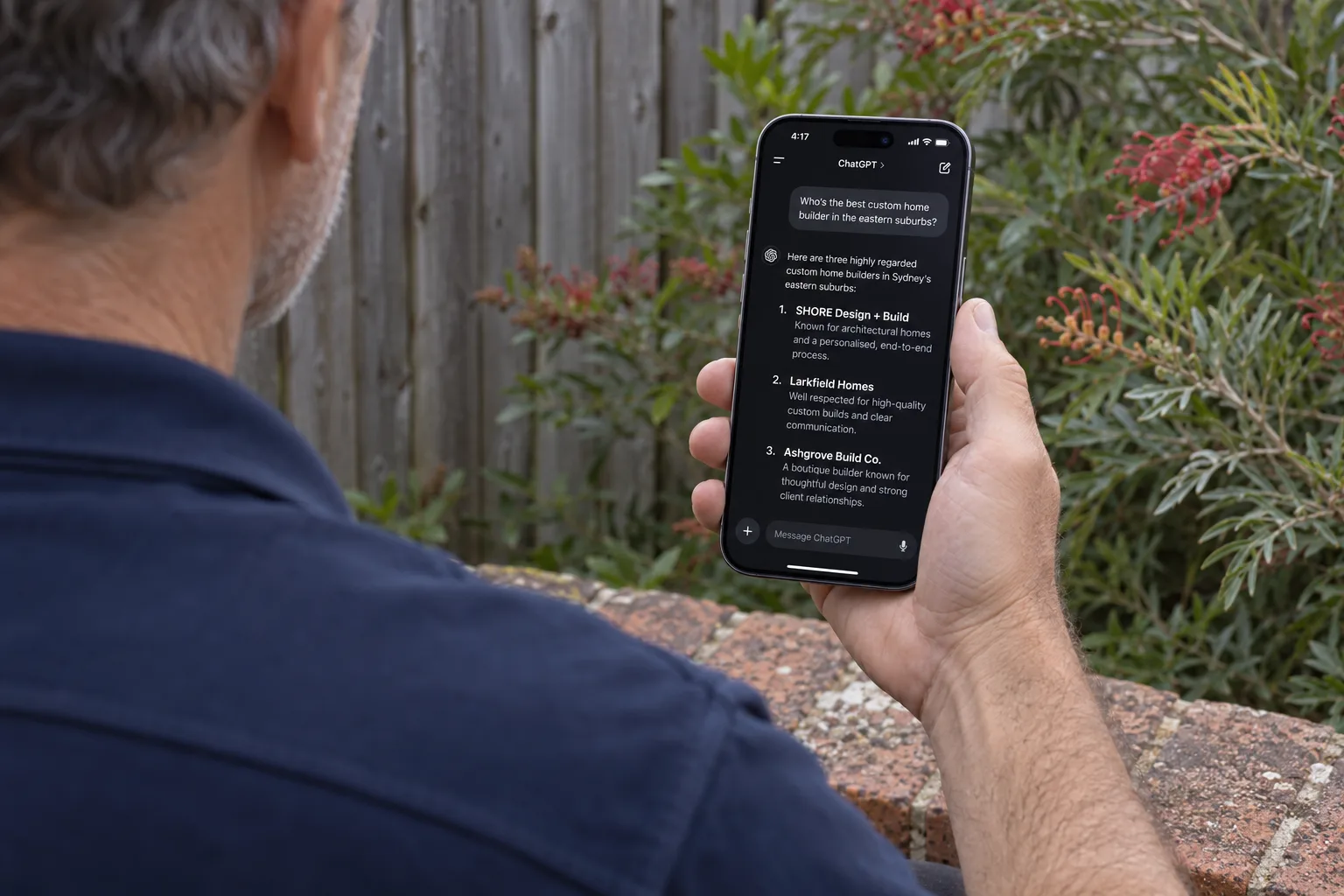
SHORE in a ChatGPT answer
Read the builder question, both saved answers and the pages behind them.
Read the ChatGPT example
For registered and unregistered providers
SEO for NDIS providers helps participants, families and support coordinators find a provider who fits their plan. We make your supports, service areas, current capacity and registration status clear on your website and Google profile. People can then see whether their plan type lets them use you before they make contact.
Our client SHORE was missing from one Sydney builder shortlist in ChatGPT, then listed first about two months later. Read how we checked it.
Our work and thinking
We built SHORE’s website and run its SEO. Our guide sets out the exact question we put to ChatGPT and what changed between the two saved answers.
GuideRead the builder question, both saved answers and the pages behind them.
Read the ChatGPT exampleHelp the right participants reach you
A family can read three provider websites and still not know who can take their child next month. Each one says it offers person-centred support. None says where or when. Our SEO services put your plain answers first: who you support, where, how soon and under which plan types.
How a participant’s plan is managed shapes which providers they can use. Self-managed and plan-managed participants can use unregistered providers for supports that do not require registration. NDIA-managed supports require a registered provider. Some supports always need registration, including specialist disability accommodation and specialist behaviour support. We state your status near the top of each support page. Fewer families call about plans you cannot accept.
The NDIA says only providers registered with the NDIS Commission may advertise as a registered provider. Phrases such as official NDIS provider are off limits when they suggest registration you do not hold. We match every page to your real status. Registered providers can link to their entry on the Commission’s Provider Register, which families use to check.
Support coordinators often shortlist providers for a participant. They need current openings, the areas you cover, how fast you respond and what to send. We build a short page for coordinators with those details and a date on the capacity note. You tell us when places open, so it stays true.
The NDIS Code of Conduct applies to registered and unregistered providers alike. It asks providers to act with integrity, honesty and transparency. It also rules out charging NDIS participants more without a reasonable justification. We explain your prices and any justified differences clearly. Families can see what a support costs before they contact you.
Your readers include participants, parents, carers and coordinators reading on a phone. We write short sentences, plain headings and one task per page. The NDIS Commission publishes its own Code of Conduct in Easy Read. We can add Easy Read summaries for your main supports. People can act without decoding sector language.
People search for a support and a place, such as support coordination near me or SIL providers in Penrith. We give each support type and region its own page. Providers visiting homes can run a Google service-area profile without showing an address. Mandatory registration for SIL began on 1 July 2026. Eligible existing providers who applied before 1 October can continue while their application is decided. We show your current status accurately, including any transition arrangement.
SEO plan fit
Choose by how many supports you offer and how many regions they reach. Anyone unsure can start with a free SEO audit.
$1,500/month + GST
One area of up to three suburbs
Best for An NDIS provider offering supports in one local area
Each month
Ongoing
No setup fee. Month to month, cancel anytime.
Our main plan
$2,900/month + GST
Up to three areas
Best for An NDIS provider offering several supports across more than one region
Each month
Ongoing
No setup fee. Month to month, cancel anytime.
$4,900/month + GST
Up to six areas
Best for A large provider with many supports and regional teams
Each month
Ongoing
No setup fee. Month to month, cancel anytime.
Every plan includes
Results guarantee. If you’re not showing up more on Google and AI search by the end of month three, we keep working for free until you are.
At the start we record where you show up for the Google searches and AI questions we agree with you, in the suburbs you serve. That is your baseline. At the end of month three we compare against it. The clock starts on day one and all we need from you is photos and project details within five business days. There’s no setup fee. Our results guarantee covers showing up more on Google and AI, not specific rankings, leads or revenue.
For example
Say a new participant brings you about $7,500 a year at two hours of support a week. Local SEO is $1,500/month + GST, which is $18,000 a year + GST. Three extra participants a year would cover it.
On these numbers it pays for itself in month 8.
| Month | Cost of Local SEO | Value of extra work |
|---|---|---|
| 1 | $1,500 | $0 |
| 2 | $3,000 | $500 |
| 3 | $4,500 | $1,500 |
| 4 | $6,000 | $3,000 |
| 5 | $7,500 | $5,000 |
| 6 | $9,000 | $7,500 |
| 7 | $10,500 | $10,000 |
| 8 | $12,000 | $12,500 |
| 9 | $13,500 | $15,000 |
| 10 | $15,000 | $17,500 |
| 11 | $16,500 | $20,000 |
| 12 | $18,000 | $22,500 |
Month 1 is setup. Extra work then grows evenly to one participant every three months by month 6. Job value is a typical Australian price from NDIA. All figures exclude GST. An example only, not a forecast or a promise. Your numbers will differ.
Explain the supports you offer, who you can work with and how someone can ask about available places. Add an Easy Read summary for the main service. Keep registration details accurate on every page.
Put each month into the supports and regions with open places. A regional support page, current coordinator information and an Easy Read summary help people check whether you can meet their needs.
Cover every support and region with its own pages across up to six areas. Weekly checks keep prices and availability in line with the NDIS Code of Conduct. The weekly update shows which regions have places to fill.
AI search
Picture a support coordinator asking ChatGPT for an NDIS occupational therapist in Campbelltown who sees under-sevens this term. That answer needs your supports, ages, area and capacity written plainly. Our AI search optimisation checks that your pages state each one where an AI tool can find it.
Coordinators may test a shortlist by asking an AI tool what a provider offers. We read what Google AI Overviews, AI Mode, ChatGPT search and Perplexity say about your registration and supports. Then we compare those answers with your current status and service pages. Families need to see which plan types you accept and whether a place is available.
We keep a list of questions families and coordinators put to these tools and rerun it monthly. If an answer names the wrong region or misstates your registration, we look up the page the answer leaned on. That page or listing is the first thing we correct.
How we work
Tell us which supports you deliver, in which areas and where you have places. That sets the first pages.
We compare every page, listing and profile with your registration status. Wording that overstates it gets fixed first.
Your team checks each page for accuracy about supports, prices and plan types before anything is published.
Your team shares totals for suitable enquiries, intake meetings and people starting support. We review them by support and region, then update capacity. Participant records stay with your team.
Good questions
Most come through referrals, support coordinators and search. Families and coordinators search for a support type and an area, then compare a few providers. A website that states supports, areas, capacity and registration status plainly helps families compare you with their needs. A coordinator page and accurate Google profiles help the referrals arrive with the right details.
Participants and families can search the NDIS Commission’s Provider Register. It lists providers registered with the Commission and shows suspended or revoked registrations. If you are registered, we link your website to your entry so people can confirm it in one click. If you are unregistered, your pages say so plainly.
No. AI tools such as ChatGPT and Google’s AI Overviews still draw on websites to answer questions about providers. A clear page about your supports, areas and registration gives them accurate facts to use. SEO now covers both search results and AI answers. Both reward plain, current information that people can check.
There is no single best provider. The right one depends on the participant’s goals, supports, location and plan type. That is why your pages should state those details plainly. A family can then rule you in or out quickly. More of your enquiries come from people you can actually support.
Our published SEO example is SHORE, a Sydney builder whose website and SEO we run. In the four weeks to 24 October 2026 it appeared in Google 10,954 times for searches without its name, up from 1,204 in the four weeks to 19 July. Its website has had about 72 enquiries since 1 July with no ads. See SHORE’s results. It also moved from no mention to first place in one ChatGPT builder shortlist across two checks about two months apart. See the SHORE comparison. We only publish results a client agrees to share. In your first month we record your own baseline, so you can see your progress from there.
At the start we record where you show up for the Google searches and AI questions we agree with you, in the suburbs you serve. That is your baseline. At the end of month three we compare against it. If you’re not showing up for more of them, we keep working for free until you are. The clock starts on day one and all we need from you is photos and project details within five business days. There’s no setup fee. Our results guarantee covers showing up more on Google and AI, not specific rankings, leads or revenue.
Setup and the monthly work both start in month one. We audit your website, optimise your Google Business Profile, set up or fix your directory listings, set up tracking and record your baseline, while the first booking pages, topic cluster articles, page upgrades and Google Business Profile posts go out with a written strategy update. The results guarantee clock starts on day one, so all three months count.
We research each article with keyword and competitor data, draft it with AI, then a person edits and fact-checks it before it goes live. You give us the facts and photos only you have. We ask you to approve any claims about your work.
Links to your website from real Australian and industry websites that relate to your business. We never buy links from paid link farms. SEO Growth includes four backlinks a month and SEO Authority includes at least four live links a month. Local SEO adds two local links or listings a month, from local directories, trade platforms, industry bodies, supplier “find an installer” pages and community sites. Every plan also sets up or fixes your directory listings at the start.
Every SEO plan is month to month with no notice period. If you cancel, you keep your website content, Google Business Profile, Google Analytics and Search Console.
Keep exploring
Delivering OT, physio or speech therapy under NDIS plans? Read the allied health guide.
SEO for allied healthSee what each plan includes before you choose one for your regions.
Compare SEO plansSend us your website and the supports with open places. We will show you what families and coordinators cannot find before they choose someone else.